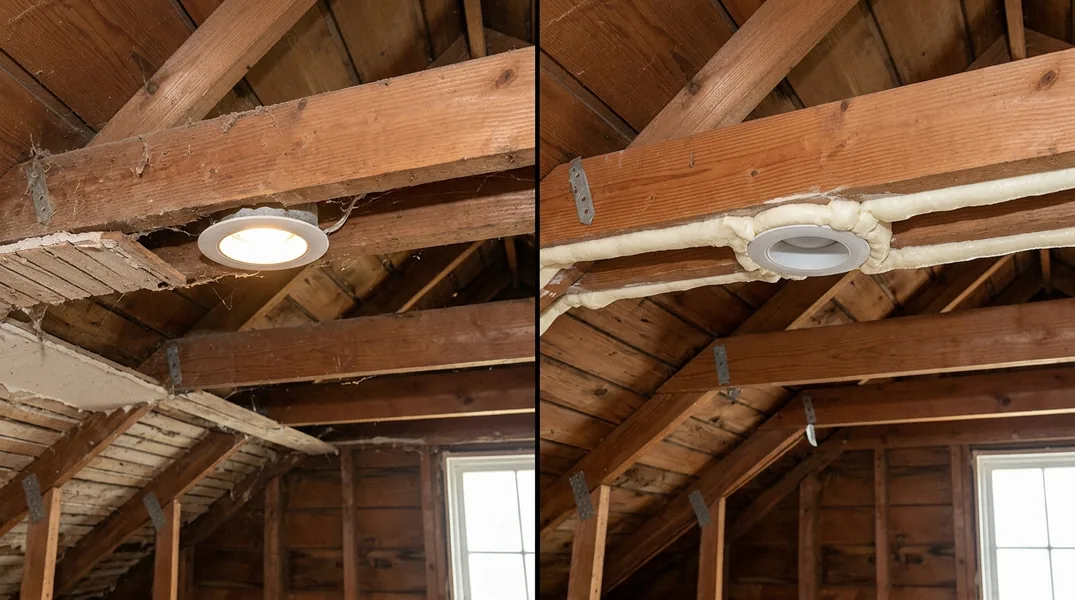
The Real Question: Do You Need a Full Replacement or Just a Top-Up?
When homeowners in Rochester start researching attic insulation, they often assume they need to tear everything out and start fresh. That's not always true. Before diving into the spray foam vs blown-in debate, the honest first step is understanding what you already have and whether it's doing its job.
Many older homes in the Rochester area still have original fiberglass batts installed decades ago. Over time, these can settle, compress, or develop gaps around obstacles like pipes and wiring. The result is uneven coverage and declining R-value. Sometimes the real solution isn't replacing everything but strategically adding insulation where it's needed most. This approach saves money, reduces waste, and often delivers the energy savings you're after without the expense of a full system overhaul.
That said, if your attic insulation is damaged by moisture, pest intrusion, or is simply too thin to meet modern standards, a more comprehensive upgrade makes sense. The key is having a professional assess your situation honestly rather than automatically recommending the most expensive option.
Spray Foam vs Blown-In Insulation: Understanding the Fundamental Differences
Attic Spray Foam Insulation and blown-in insulation operate on completely different principles. Blown-in insulation, whether cellulose or fiberglass, is pneumatically applied as loose fibers that settle into place. Spray foam, by contrast, is a liquid that expands and hardens, creating a continuous thermal and air barrier. This fundamental difference shapes everything from performance to cost to installation complexity.
Blown-in insulation is typically less expensive upfront and easier to add as a top-up in existing attics. You don't need to remove existing material or prepare the space as carefully. Installers blow it in around obstacles and into gaps, and it settles to create a blanket of coverage. The downside is that blown-in materials can settle over time, creating voids, and they don't seal air leaks the way spray foam does. For homeowners looking for a cost-effective way to boost their R-value without major disruption, blown-in is often the practical choice.
Attic Spray Foam Insulation offers superior air sealing and a higher R-value per inch, making it ideal for attics where air infiltration is a major problem. It conforms to irregular spaces, fills gaps around framing and penetrations, and doesn't settle. However, it requires more careful installation, proper equipment, and typically costs more. For homeowners willing to invest in long-term energy efficiency and air quality, spray foam delivers measurable returns.
Spray Foam vs Fiberglass: Why the Comparison Matters in Rochester Attics
Fiberglass batts have been the standard attic insulation for generations, and many Rochester homes still rely on them. When comparing spray foam vs fiberglass, the conversation often centers on R-value, air sealing, and longevity. Fiberglass batts are affordable, widely available, and relatively simple to install. They work reasonably well in properly ventilated attics and are still a legitimate choice for many applications.
The problem is that fiberglass doesn't seal air leaks. If your attic has gaps around ductwork, electrical penetrations, or the attic hatch, warm air escapes and cold air enters, regardless of your fiberglass R-value. Closed Cell Spray Foam Insulation addresses this directly by creating an air-tight seal while also providing insulation. In Rochester's cold winters, that air sealing capability translates into real energy savings and improved comfort. Additionally, spray foam resists moisture and doesn't degrade the way fiberglass can when exposed to humidity, a consideration for any attic in our climate.
For homeowners dealing with existing fiberglass that's in decent condition, adding Open Cell Spray Foam Insulation over top can be a smart middle ground. It seals air leaks while preserving the investment in existing insulation. This hybrid approach often delivers better results than full replacement at a lower cost.
Blown-In vs Spray Foam: Which Makes Sense for a Simple Top-Up?
If your attic insulation is generally intact but thin or uneven, a top-up is often the most honest recommendation. Both blown-in and spray foam can work for this purpose, but they suit different situations. Blown-in insulation is the practical choice if you're adding R-value to existing fiberglass or cellulose without addressing air leaks. It's faster, cheaper, and less disruptive. You can add several inches of blown-in fiberglass or cellulose over your existing layer, and the job is done in a day.
Spray foam becomes the better choice if you've identified air leakage as a problem. If you feel drafts in winter, notice ice dams on your roof, or see significant temperature differences between rooms, air infiltration is likely your culprit. In those cases, spray foam's air-sealing properties justify the higher pricing. You're not just adding insulation, you're fixing a fundamental performance problem.
The honest answer often depends on your specific situation. A professional energy audit or thermal scan can reveal where air is leaking and help determine whether blown-in or spray foam makes more sense for your top-up. At Rochester Spray Foam Insulation, we assess each attic individually and recommend the approach that delivers the best value for your home and budget.
Best Insulation for Attic: Matching Material to Your Goals
Determining the best insulation for attic applications isn't about finding a one-size-fits-all answer. It's about matching the material to your specific goals, existing conditions, and budget. If your primary concern is cost and you have a simple, well-ventilated attic space, blown-in fiberglass or cellulose works well. If you're fighting air leaks, moisture issues, or want maximum long-term performance, spray foam is the superior choice.
Cellulose, another blown-in option, offers good R-value per inch and is made from recycled paper, appealing to environmentally conscious homeowners. However, it can absorb moisture and may not be ideal in damp attics. Fiberglass is inert and moisture-resistant but doesn't seal air. Spray foam seals and insulates simultaneously but costs more upfront. In Rochester's humid summers and cold, wet winters, the moisture-resistance of spray foam gives it a real advantage for long-term durability.
The best insulation is ultimately the one that solves your actual problem at a price you're comfortable with. Sometimes that's a blown-in top-up. Sometimes it's a full spray foam installation. The key is getting honest, professional advice rather than a sales pitch for the most expensive option.
Attic Spray Foam Insulation Cost in Rochester: What to Budget
Cost is often the deciding factor, and it's fair to wonder why spray foam commands a higher pricing than blown-in alternatives. Spray foam requires specialized equipment, trained technicians, and careful application. The materials themselves are more expensive. However, the benefits justify the cost for many homeowners: superior air sealing, higher R-value per inch, longer lifespan, and better performance in challenging conditions.
For a typical attic top-up in Rochester, blown-in insulation might cost several hundred dollars, while spray foam could run into the thousands depending on square footage and depth. But spray foam lasts longer, performs better in extreme weather, and can reduce your heating and cooling costs by 15 to 20 percent in many cases. Over 10 to 15 years, those energy savings often exceed the initial cost difference.
The honest approach is to get quotes for both options and calculate the real return on investment. Consider your long-term plans for the home, your energy bills, and whether air sealing is a priority. If you're staying in your Rochester home for many years and energy efficiency matters to you, spray foam's higher upfront cost often makes financial sense. If you're looking for a quick, affordable boost to insulation value, blown-in is the practical answer. Contact Rochester Spray Foam Insulation at (585) 565-5602 to discuss your situation and get a free estimate that lays out all your options with real numbers.
Looking for a professional spray foam insulation contractor in Rochester? Rochester Spray Foam Insulation responds fast for all your spray foam insulation needs.
Get a Free Quote