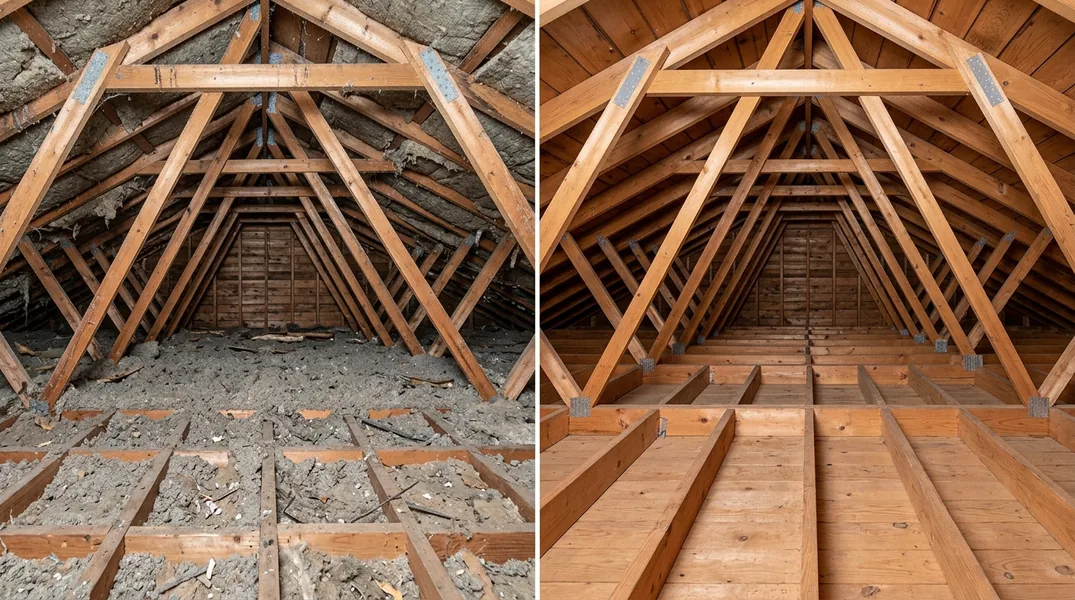
Understanding Spray Foam Insulation: Open-Cell vs Closed-Cell
When homeowners in Rochester begin researching insulation options, spray foam quickly rises to the top of the list. But not all spray foam is created equal. The two main types, open-cell and closed-cell spray foam, perform very differently, and understanding these differences is essential before making a decision for your home.
The distinction comes down to cell structure. Open-cell spray foam has cells that are not completely closed off from one another, creating a softer, more flexible material. Closed-cell spray foam, by contrast, has cells that are tightly sealed, resulting in a denser, more rigid product. This fundamental difference affects everything from performance to cost to application, which is why choosing between them requires careful consideration of your specific needs and priorities.
What Is Open Cell Spray Foam and How Does It Work?
Open Cell Spray Foam Insulation is a lighter, more breathable insulation material that expands significantly after application. When the foam is sprayed into wall cavities or attic spaces, it expands to fill gaps and cracks, then hardens into a semi-rigid state. Because the cells remain open, air and moisture can move through the material, which has both advantages and drawbacks.
One of the primary benefits of open-cell foam is its lower cost compared to closed-cell alternatives. It's also excellent for sound dampening, making it a popular choice for interior walls and attics where noise reduction matters. Additionally, open-cell foam allows your home to breathe, which can be beneficial in certain climates. However, it offers a lower R-value per inch (typically around R-3.5 to R-3.6 per inch), meaning you'll need more thickness to achieve the same insulation performance as closed-cell foam. It's also more permeable to air and moisture, so it may not be the best choice in areas prone to moisture intrusion or for exterior applications.
What Is Closed Cell Spray Foam and Why Choose It?
Closed Cell Spray Foam Insulation is a denser, more robust insulation material with superior thermal performance. When applied, it expands less than open-cell foam but creates a much tighter seal. The closed cellular structure means the material is impermeable to air and moisture, making it an excellent vapor barrier as well as an insulator.
The primary advantage of closed-cell foam is its exceptional closed cell spray foam R value, which typically ranges from R-6 to R-7 per inch. This means you achieve superior insulation with less material thickness, which is especially valuable in attics or walls where space is limited. Closed-cell foam also provides structural strength, can help prevent air leaks more effectively, and offers better moisture resistance. For homeowners in Rochester dealing with harsh winters and temperature fluctuations, closed-cell foam often delivers better long-term energy savings. The trade-off is higher upfront cost, which is why many homeowners weigh this option carefully against their budget and insulation goals.
Spray Foam R Value Comparison: Which Provides Better Insulation?
When comparing insulation materials, R-value is the standard measure of thermal resistance. Higher R-values indicate better insulating performance. Understanding how open-cell and closed-cell foams differ in this metric is crucial for making an informed decision about which type suits your Attic Spray Foam Insulation project.
Open-cell foam typically delivers an R-value of R-3.5 to R-3.6 per inch of thickness. This means that to achieve an R-38 rating (a common target for attic insulation), you would need approximately 10 to 11 inches of open-cell foam. Closed-cell foam, with its R-6 to R-7 per inch rating, requires only 5 to 6 inches to reach the same R-38 performance. For homeowners in Rochester with limited attic space or those seeking maximum thermal protection, closed-cell foam's superior R-value per inch is often the more efficient choice. However, if budget is the primary concern and you have adequate space for thicker insulation, open-cell foam can still meet your R-value requirements at a lower overall cost.
Attic Spray Foam Insulation Cost in Rochester: What to Budget
Cost is typically the deciding factor for many homeowners. Open-cell spray foam generally costs between $0.44 and $0.65 per board foot, while closed-cell spray foam ranges from $1.00 to $1.50 per board foot or higher. For a typical attic project, open-cell foam might cost $1,500 to $3,000, whereas closed-cell foam could run $3,500 to $6,000 or more, depending on the size and complexity of the space.
While closed-cell foam carries a higher upfront cost, many homeowners find the investment worthwhile due to superior energy efficiency and long-term savings on heating and cooling bills. Open-cell foam is the more budget-friendly option, particularly for those who prioritize immediate affordability over maximum thermal performance. To get an accurate assessment of what your specific project will cost, it's best to request a free estimate from Rochester Spray Foam Insulation. Our team can evaluate your attic, discuss your priorities, and provide transparent pricing based on your exact needs. Call us at (585) 565-5602 to schedule your consultation.
Which Type Is Right for Your Rochester Home?
The choice between open-cell and closed-cell spray foam ultimately depends on your specific situation, budget, and priorities. If you're primarily concerned with cost and your attic has adequate space, open-cell foam is a solid choice that will still provide meaningful insulation improvements. If you want maximum energy efficiency, superior moisture protection, and don't mind investing more upfront, closed-cell foam is the premium option that delivers better long-term performance.
Consider the climate in Rochester, where winters are cold and humid summers can bring moisture concerns. Closed-cell foam's moisture resistance and superior R-value make it particularly well-suited to our regional climate, but open-cell foam can work well too if properly installed and maintained. The best way to determine which type is ideal for your home is to consult with experienced professionals. Rochester Spray Foam Insulation has years of experience helping homeowners throughout the area make this decision. We assess your attic condition, discuss your energy goals, and recommend the solution that offers the best value for your situation. Contact us today at (585) 565-5602 or visit our website to request a free estimate and let our team guide you toward the right insulation choice for your home.
Looking for a professional spray foam insulation contractor in Rochester? Rochester Spray Foam Insulation responds fast for all your spray foam insulation needs.
Get a Free Quote