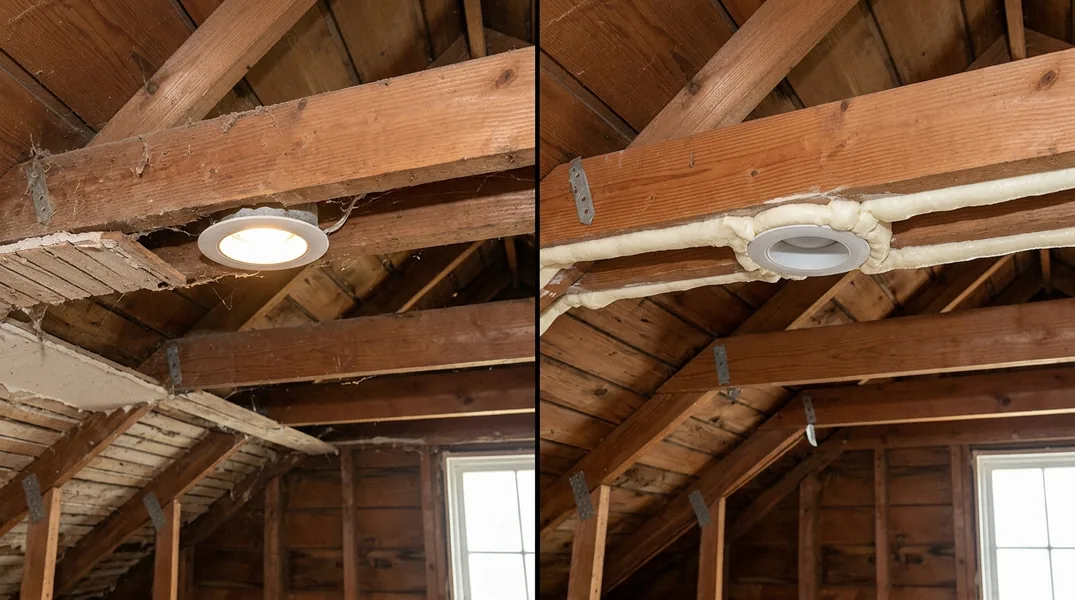
Lake-Effect Snow and Ice Dams: A Rochester Winter Reality
Rochester sits in one of the most challenging snow climates in the United States. The region's proximity to Lake Ontario creates intense lake-effect snow events that dump feet of snow on local roofs during winter months. While beautiful, this weather pattern creates a serious problem for homeowners: ice dams. These frozen ridges form along roof edges when warm air from the attic melts snow on the roof, which then refreezes at the colder eaves, trapping water that can leak into walls, ceilings, and insulation.
Many homeowners assume that adding more insulation will solve ice dam problems, but the real culprit is often uncontrolled air leakage. Warm, moist air escaping from living spaces into the attic is what creates the temperature conditions that melt snow in the first place. Without proper air sealing, even the best Attic Spray Foam Insulation will fail to prevent ice dams and the moisture damage that follows.
Why Air Sealing Must Come Before Insulation
The building science behind attic performance is straightforward: you cannot insulate your way out of an air leakage problem. Air leakage is the movement of unconditioned air through gaps, cracks, and holes in your home's envelope. In Rochester attics, common air leaks occur around ceiling penetrations (light fixtures, exhaust fans, electrical outlets), rim joists, soffit vents, and the attic access hatch. When warm, humid indoor air escapes into a cold attic, it cools rapidly and releases moisture as condensation. This moisture accumulates on rafters, insulation, and roof decking, creating the perfect environment for mold growth and wood rot.
Air sealing addresses the root cause by creating a continuous barrier that prevents conditioned air from escaping into the attic. Once air leaks are sealed, insulation can perform its intended job: slowing heat transfer. Closed Cell Spray Foam Insulation is particularly effective for this application because it simultaneously seals air leaks and provides high R-value insulation. The foam expands to fill cavities and gaps, eliminating the air pathways that would otherwise allow warm, moist air to reach the cold attic space where condensation forms.
Condensation in Attic Spaces: The Hidden Damage
Homeowners often don't realize they have a condensation problem until significant damage has already occurred. In winter, when outdoor temperatures drop well below freezing, an uninsulated or poorly sealed attic becomes a cold surface. When warm, moist air from your home rises and enters the attic through air leaks, it meets this cold surface and condenses into liquid water. This water drips onto insulation, soaks into wood framing, and creates moisture levels that can exceed 90 percent relative humidity. Under these conditions, mold spores that are always present in the air begin to colonize and spread rapidly.
The problem intensifies during lake-effect snow events. The combination of heavy snow load and warm attic air creates ideal conditions for ice dams. Water backs up under shingles and seeps into the attic, where it encounters cold wood and insulation already saturated with condensation. The result is accelerated wood decay, compromised structural integrity, and potentially dangerous mold growth that can affect your family's health. Many homeowners discover the problem only when they notice water stains on ceilings or smell musty odors in upper rooms.
The Role of Sealed Attic Insulation in Preventing Moisture Problems
Sealed attic insulation using spray foam creates what building scientists call an unvented attic assembly. Unlike traditional vented attics, which rely on soffit and ridge vents to manage moisture, an unvented attic spray foam approach seals the attic boundary completely. This means the attic becomes part of your home's conditioned space rather than an unconditioned buffer zone. Warm, moist air no longer escapes into the attic because there is no pathway for it to travel. Without that moisture source, condensation cannot form, and ice dams lose one of their primary causes.
The key to this strategy is creating an air-tight seal at every ceiling penetration and along the entire attic floor or roof deck. Spray foam adheres to all surfaces, expands to fill irregular gaps, and maintains its seal integrity over decades. When properly installed, closed-cell foam also provides a vapor retarder function, further protecting against moisture intrusion. For Brighton and Irondequoit homeowners dealing with severe lake-effect snow, this approach has proven dramatically more effective than traditional fiberglass insulation combined with ventilation.
Attic Spray Foam Insulation Cost in Rochester: What to Budget
The investment in proper air sealing and spray foam insulation is significant, but it must be weighed against the cost of water damage repair, mold remediation, and ongoing ice dam problems. Pricing for attic spray foam insulation in Rochester typically ranges from $1,500 to $4,000 for average residential attics, depending on square footage, foam type, and existing conditions. Homes with complex roof lines, multiple penetrations, or extensive air leaks may fall on the higher end of that range. However, homeowners often recover much of this investment through reduced heating and cooling costs. A properly sealed and insulated attic can lower energy bills by 15 to 20 percent annually.
More importantly, the cost of preventing ice dam damage and condensation problems is far less than addressing them after they occur. Water damage repair, structural wood replacement, and mold remediation can easily exceed $10,000 to $25,000. When you consider that Closed Cell Spray Foam Insulation typically lasts 80 years or more without degradation, the long-term value becomes clear. Rochester Spray Foam Insulation can provide a detailed free estimate tailored to your home's specific needs and your local climate challenges.
Getting Started: Attic Spray Foam Insulation Near Me
If you live in Rochester and are concerned about ice dams, attic moisture, or rising energy costs, the first step is a professional attic assessment. A qualified contractor will examine your current insulation, identify air leaks, check for existing moisture damage, and recommend the best solution for your home. Some attics may benefit from air sealing alone, while others require a complete spray foam installation. The evaluation is essential because every home is different, and a one-size-fits-all approach often leads to disappointing results.
Rochester Spray Foam Insulation specializes in helping local homeowners protect their attics from lake-effect snow damage and condensation problems. With years of experience in the Rochester climate and a deep understanding of how spray foam performs in extreme winter conditions, our team can design a solution that keeps your attic dry, your home comfortable, and your energy bills low. Call us today at (585) 565-5602 or request a free estimate to learn how sealed attic insulation can transform your home's performance this winter and for decades to come.
Looking for a professional spray foam insulation contractor in Rochester? Rochester Spray Foam Insulation responds fast for all your spray foam insulation needs.
Get a Free Quote