Why Capes and Knee Walls Create Cold Bedrooms
If you own a cape or colonial-style home in Greece or Irondequoit, you've likely noticed that upstairs bedrooms feel significantly colder than the rest of your home during winter months. This is not a mystery or a quirk of older architecture. It's a physics problem, and it has a proven solution.
Capes and colonials feature distinctive sloped ceilings and knee walls (the short walls that run perpendicular to the roofline). These architectural elements create unique challenges for insulation. Unlike a traditional two-story home with a flat second floor, the space above knee walls is often poorly insulated or not insulated at all. Cold air settles in these cavities, and heat escapes through the roof. Meanwhile, the knee wall itself acts as a thermal bridge, allowing cold outdoor air to radiate inward. Homeowners in Rochester with these home styles frequently report bedroom temperatures 10 to 15 degrees Fahrenheit lower than downstairs living areas.
The Limitations of Traditional Insulation in Sloped Spaces
Fiberglass batts and blown-in cellulose were the standard insulation choices for decades, and they still serve a purpose in many homes. However, these materials have significant shortcomings when it comes to capes and knee walls. Batts are rigid and designed for standard framing cavities. When installers attempt to fit them around the irregular angles of sloped ceilings, gaps inevitably form. Blown-in insulation settles over time and does not seal air leaks, which are the primary culprit behind cold bedrooms.
Additionally, older homes in the Rochester area often have deteriorated original insulation that has compressed, shifted, or become contaminated. Attic Spray Foam Insulation solves these problems because it expands to fill every cavity, crack, and corner. Unlike traditional materials, spray foam creates an air-tight seal that prevents warm air from escaping and cold drafts from entering. For homeowners with cold upstairs bedrooms, this difference is transformative.
How Spray Foam Works in Knee Walls and Sloped Ceilings
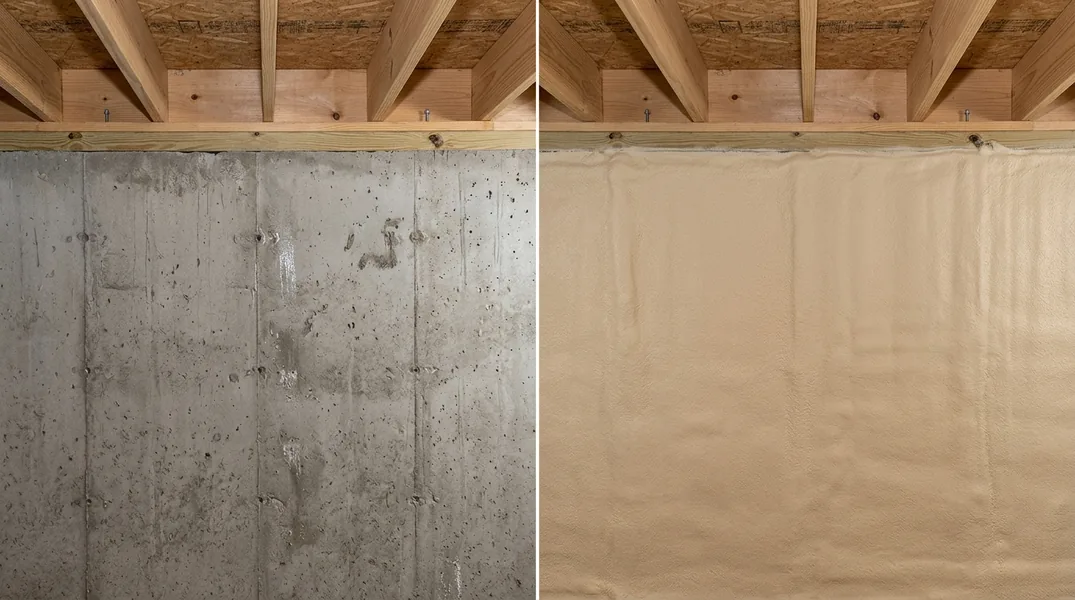
Closed Cell Spray Foam Insulation is the ideal choice for attic spaces above knee walls and sloped ceilings. When applied, the foam expands to fill the entire cavity, conforming to irregular shapes and sealing every air gap. Closed cell foam has an R-value of approximately 6 to 7 per inch, meaning a 4-inch application provides an R-value of 24 to 28. This high performance per inch of thickness is critical in cape and colonial homes where headroom is already limited.
The air-sealing properties of closed cell foam are equally important. Heat loss in cold bedrooms occurs not just through conduction (through the insulation material itself) but primarily through air infiltration. When warm indoor air leaks into the attic space, it loses its heat to the cold exterior. Spray foam eliminates this pathway. Additionally, closed cell foam provides structural support to the roof decking and acts as a vapor barrier, protecting your home from moisture damage. For homes in Greece and Irondequoit that experience significant winter weather, this protection is invaluable.
Old Insulation Removal and Preparation
Before spray foam can be installed, old insulation must be removed if it is contaminated, settled, or blocking access to the structural cavities. Removal is not optional. Spray foam applied over degraded batts or compressed blown-in insulation will not perform as intended because it cannot make full contact with the framing. Additionally, old insulation may contain mold, pest droppings, or other contaminants that compromise air quality and create health hazards.
The removal process requires proper safety protocols and disposal procedures. Professional crews use containment barriers, HEPA filtration, and personal protective equipment to prevent dust and contaminants from spreading into living spaces. After removal, the attic cavity is inspected for structural damage, pest entry points, and air leaks that need sealing before foam application. Rochester Spray Foam Insulation handles the complete process, from old insulation removal through final cleanup, ensuring your attic is properly prepared for new spray foam installation. This thorough approach takes additional time and cost upfront but prevents costly mistakes and ensures maximum performance.
Attic Spray Foam Insulation Cost in Rochester: What to Budget
The cost of spray foam insulation varies based on attic size, the extent of old insulation removal, and whether the foam is applied to just the roof deck or also to the knee walls. In general, closed cell spray foam costs more per square foot than fiberglass or cellulose, but the superior performance and durability often justify the investment. Many homeowners in Rochester report that the energy savings and improved comfort pay back the installation cost within 5 to 10 years.
For a typical cape or colonial with 1,000 to 1,500 square feet of attic space, budget between $3,000 and $6,000 for professional spray foam insulation, depending on local conditions and the depth of foam applied. If old insulation removal is required, add another $1,000 to $2,000. These figures are estimates. The best way to understand your specific costs is to request a free estimate from Rochester Spray Foam Insulation. Our team will assess your attic, discuss your comfort goals, and provide transparent pricing with no hidden fees. Call (585) 565-5602 to schedule an evaluation.
Choosing the Right Contractor Near Me: What to Ask
Spray foam insulation installation is a specialized skill. Poor application results in incomplete coverage, uneven density, and wasted money. When selecting a contractor in the Rochester area, verify that they are insured, and experienced specifically with attic spray foam projects in capes and colonials. Ask for references from recent projects and request to see before and after thermal imaging if available. Reputable contractors are transparent about their process, timeline, and warranty coverage.
Rochester Spray Foam Insulation brings years of local experience to every project. We understand the specific challenges of homes in Greece, Irondequoit, and throughout the Rochester region. Our team uses professional-grade equipment, follows manufacturer specifications precisely, and stands behind our work with comprehensive warranties. If you are researching spray foam insulation options and want to speak with a knowledgeable professional who knows your home's climate and construction style, contact us at (585) 565-5602 or visit our website to request a free estimate. We are ready to help you eliminate cold bedrooms and improve your home's energy efficiency.
Looking for a professional spray foam insulation contractor in Rochester? Rochester Spray Foam Insulation responds fast for all your spray foam insulation needs.
Get a Free Quote